REGISTER FOR weekly JUNIOR RESHAPERS CLUB
Wicor School Botfish Aquarium
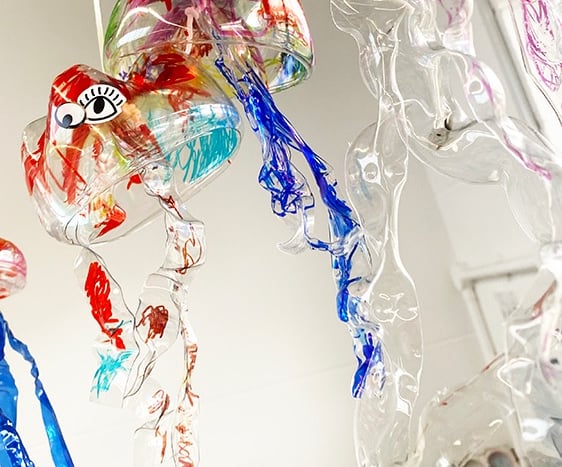
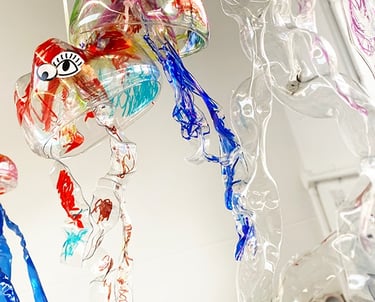
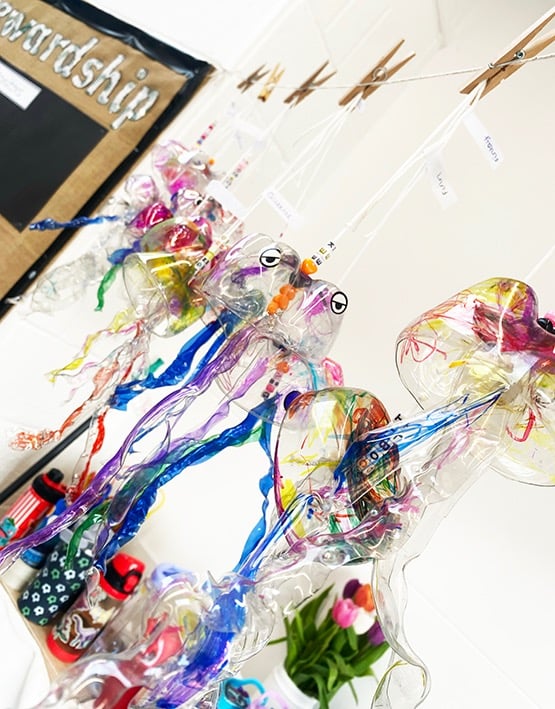
What a joy to as Artcycle took up the challenge to facilitate two afternoon workshop at Wicor School in Portchester. Wicor is renowned for its sustainable culture and the reception year children were already keen to walk the stewardship journey, as they each rescued and reshaped a plastic bottle into a sea creature.
3/12/2026
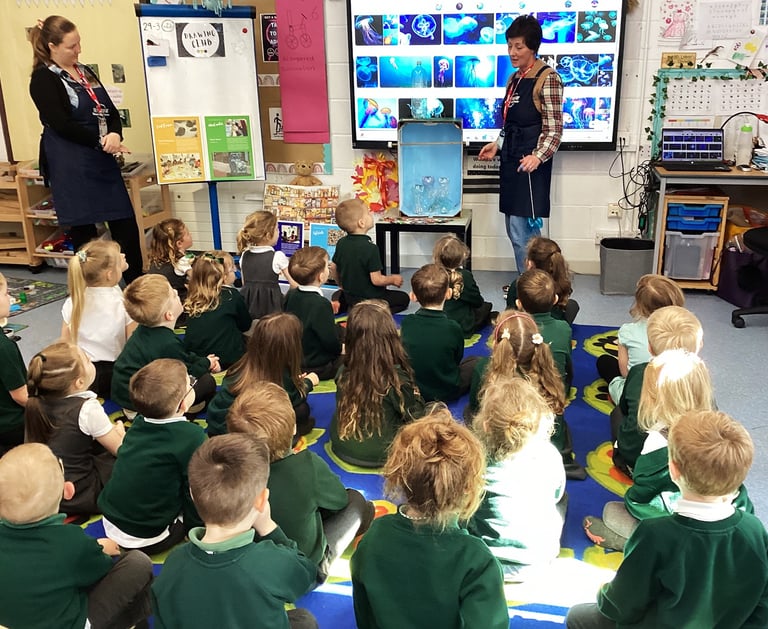
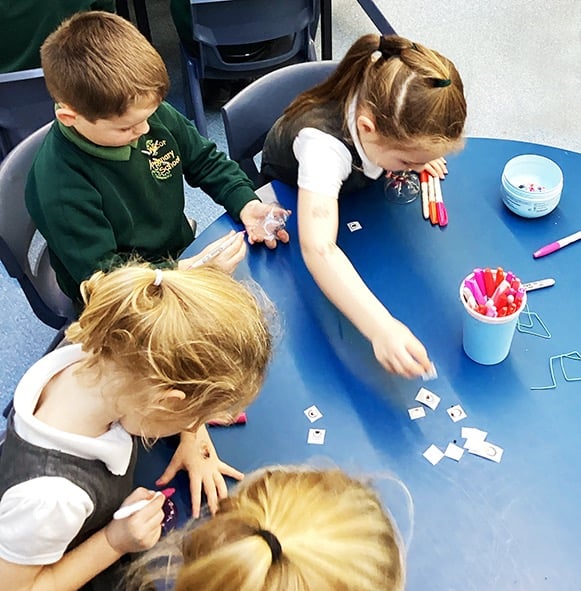
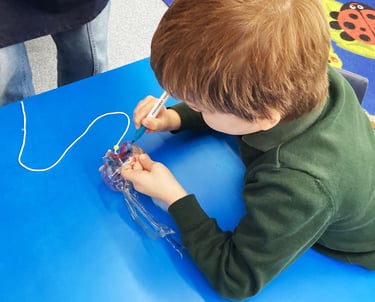
The thigh-high tables and small chairs were scattered around the classroom. It was lunchtime and, while the children were out on their break, the room was still and quiet before the bell rang and the shuffle of small feet returned. I had forgotten just how small four-year-olds are. It’s been fifteen years since my own daughter was that age, and very quickly I found myself answering a multitude of rapid-fire questions all at once.
“What’s your name?”
“What’s that?”
“I like your hair.”
“Can I have a go?”
Year R teacher Karen Slater soon ushered the 29 children back into order with a clear instruction:
“Come and sit on the mat now, and Claire will get the activity ready and then she’ll tell you all about it.”
These young crafty recyclers were beautifully behaved and incredibly inquisitive. Karen showed the children a selection of online images of jellyfish—each one unique, graceful and stunning in its colours and shapes.
To help the children see how something ordinary can be transformed into something fun, I showed them one I had made earlier: a zipper pencil case made from a Wotsits crisp packet. The children immediately began suggesting alternative uses for it, which led to a giggling fit when they proposed using it to hold ice cream, a banana, or even their sandwiches.
They quickly realised the potential hidden in rubbish. An empty plastic juice bottle suddenly became an exciting possibility as I demonstrated how, once rescued, it could be reshaped into a unique sea creature—just like the ones we had seen in the sea kingdom.
These children are already familiar with the idea of stewardship. Wicor School is surrounded by beautiful gardens and is locally known for its vegetable garden and horticultural curriculum, so the idea of caring for the environment is already part of their learning.
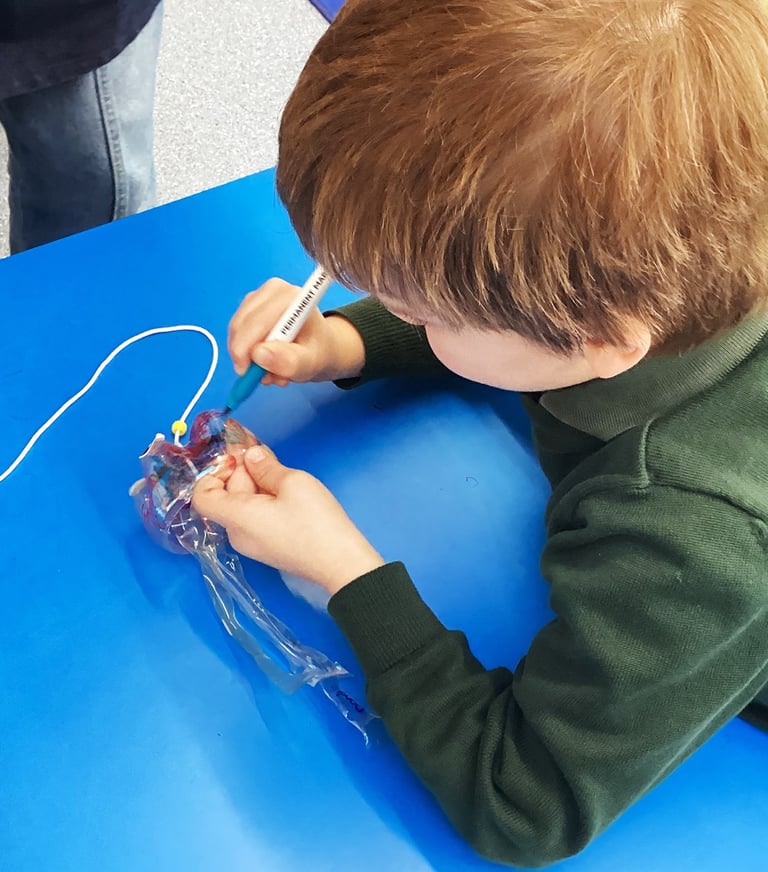
Our volunteers Lorraine and Charlotte joined the session. Lorraine is a retired Montessori teacher, and Charlotte has recently qualified as a mainstream teacher. The two-hour session gave us enough time to prepare the tables, each set with pots of colourful Sharpies and the prepared bottle “heads”—the bases of plastic bottles—ready for each child to decorate.
The preparation for this activity took around five hours beforehand. Each bottle had been collected from recycling bins. The bases were cut off and then carefully heated with an iron to soften and sculpt the edges, folding them inward before drilling a hole for assembly.
The tentacles were made from the middle sections of the bottles, cut into strips and gently warmed with a candle flame so they could be twisted and shaped to create a fluid, flowing effect.
They may never be as beautiful as God’s original creation, but through this activity the children helped rescue 58 plastic bottles that might otherwise have been discarded to who knows where.
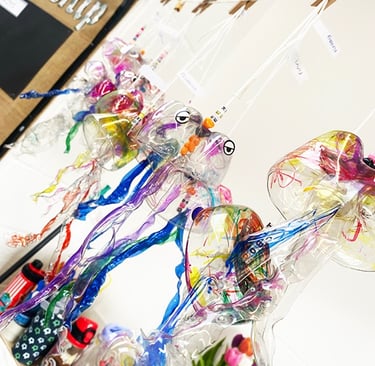
Once decorated, the heads and tentacles were assembled by threading them together with elastic cord and securing them with a bead. When they were finally hung up on the line, each creature represented a child’s ability to see potential in something that had once been thrown away.
Together, they had created their own colourful Botfish Aquarium.
If you would like Artcycle to visit your school on a Monday, please contact claire@artcyclecic.co.uk
John 6:12 NIV Jesus said "Gather the pieces that are left over. Let nothing be wasted".
Dear Claire, Thank you so much — we really appreciate you coming in. The children absolutely loved the session and were so proud of their Botfish creations. Thank you too for the resources — we’re looking forward to using them and building on what you’ve started. We’d love to welcome you back in the future and will certainly pass your details on to the junior school. Thanks again for such a lovely experience.
Karen and Lauren, Wicor Primary School
★★★★★